
POWER SOLUTION
New Energy Ship Power and Propulsion System Typical Solutions
1. Pure Battery-powered Ship
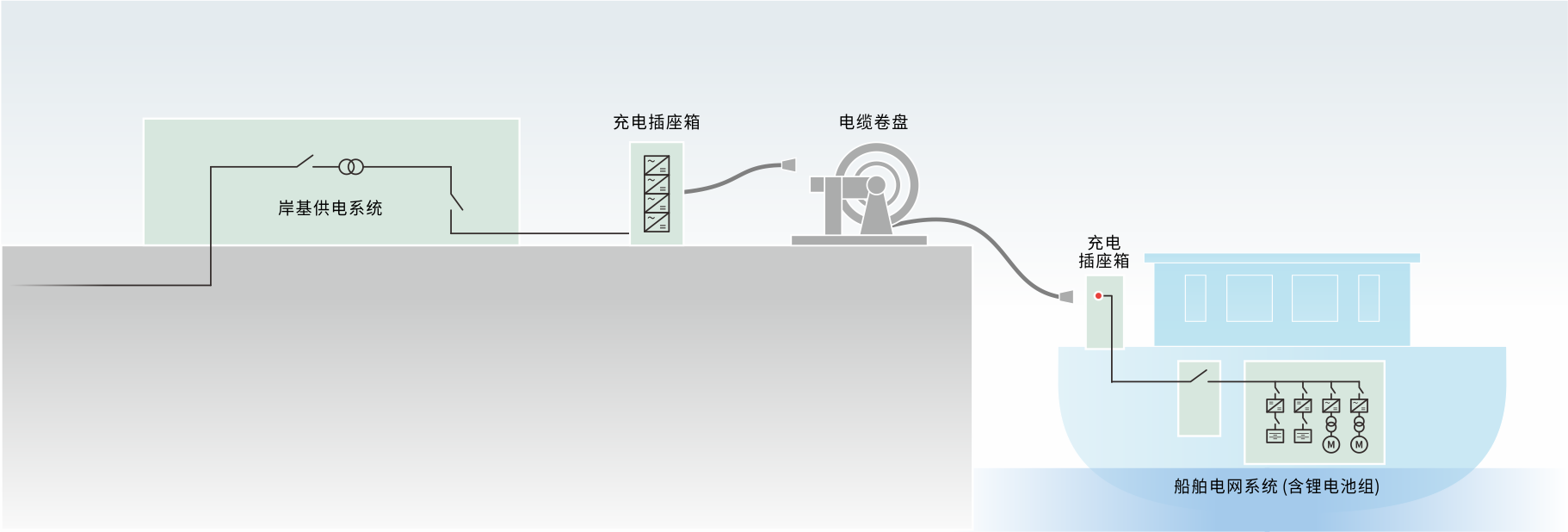
Pure battery-powered ships use lithium batteries (or supercapacitors, fuel cells) as the power source and electric propulsion. The equipment composition is simple and reliable and can achieve zero pollution emissions, low vibration, and low noise. The battery (or supercapacitor) is configured according to the ship’s endurance requirements.
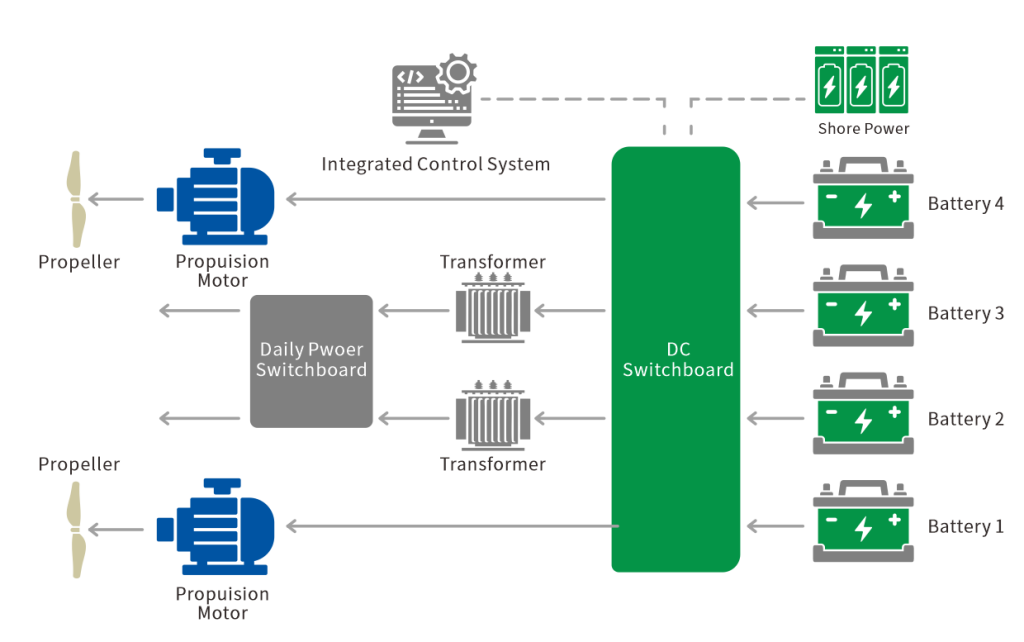
2. Diesel-Electric Hybrid Ship
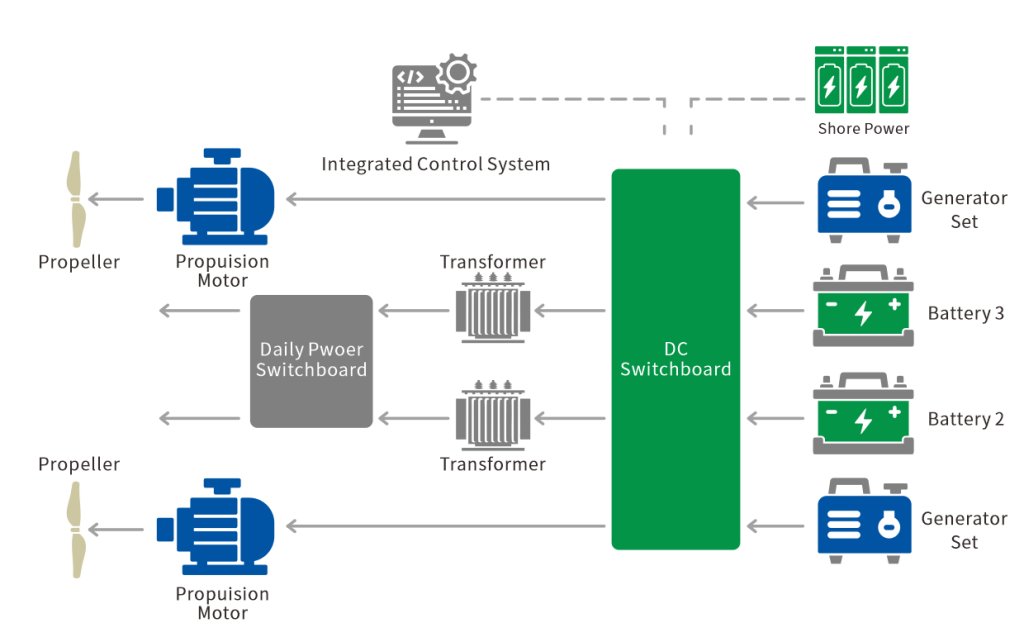
Parallel hybrid system uses a shaft reversible motor + main engine driven propeller, which can realize multiple working modes of pure electric propulsion (PTH), shaft power generation (PTO) and hybrid propulsion (PTI). The system has high safety redundancy and part of flight segments are zero-emission.
3. Parallel Hybrid Ship
Parallel hybrid system uses a shaft reversible motor + main engine driven propeller, which can realize multiple working modes of pure electric propulsion (PTH), shaft power generation (PTO) and hybrid propulsion (PTI). The system has high safety redundancy and part of flight segments are zero-emission.
Charging System Solutions for Coastal and Riverside New Energy Vessels
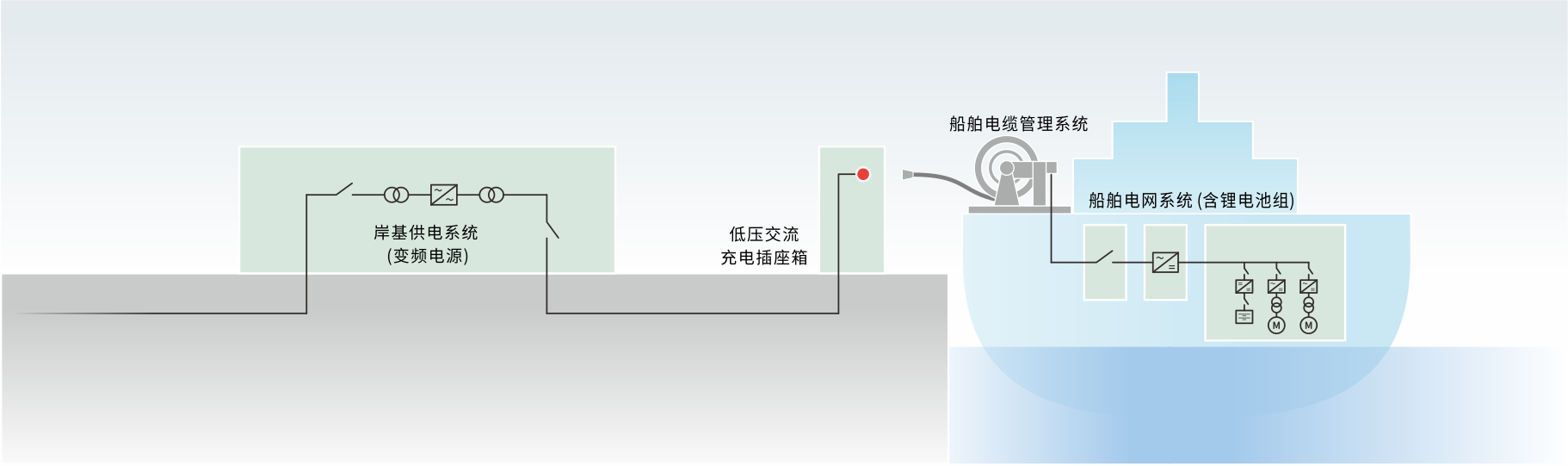
1. Low-Voltage AC Charging System Solution (Cable Reel on Vessel Side)
This solution equips the shore side with a variable-frequency power supply and socket box. The on-board cable management system delivers the cable to connect with the shore-side socket box, and then the AC/DC module on the ship’s switchboard charges the vessel’s battery pack. It is suitable for large hybrid-powered vessels.
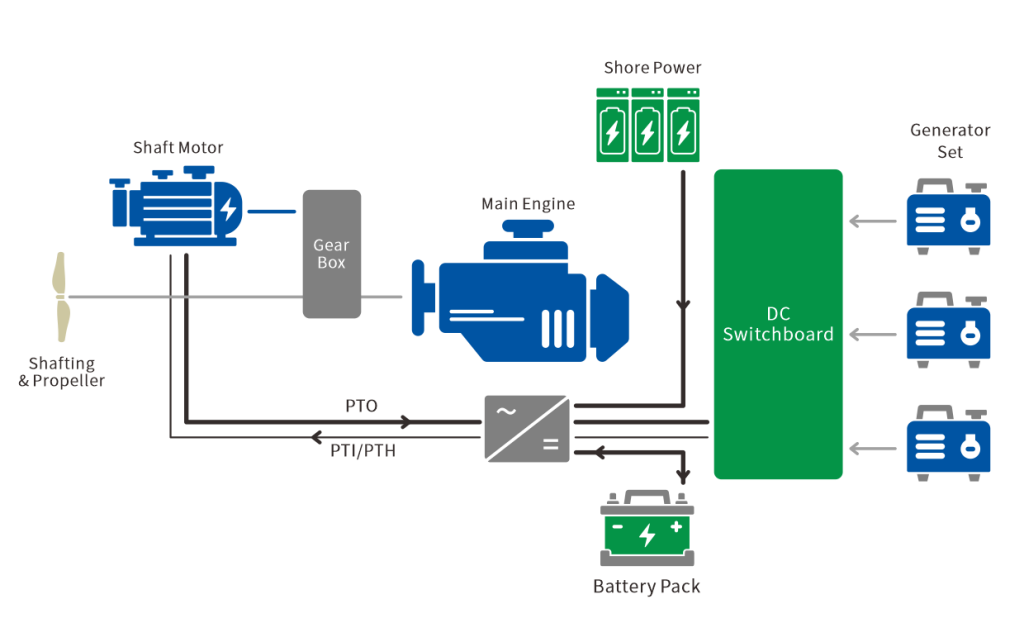
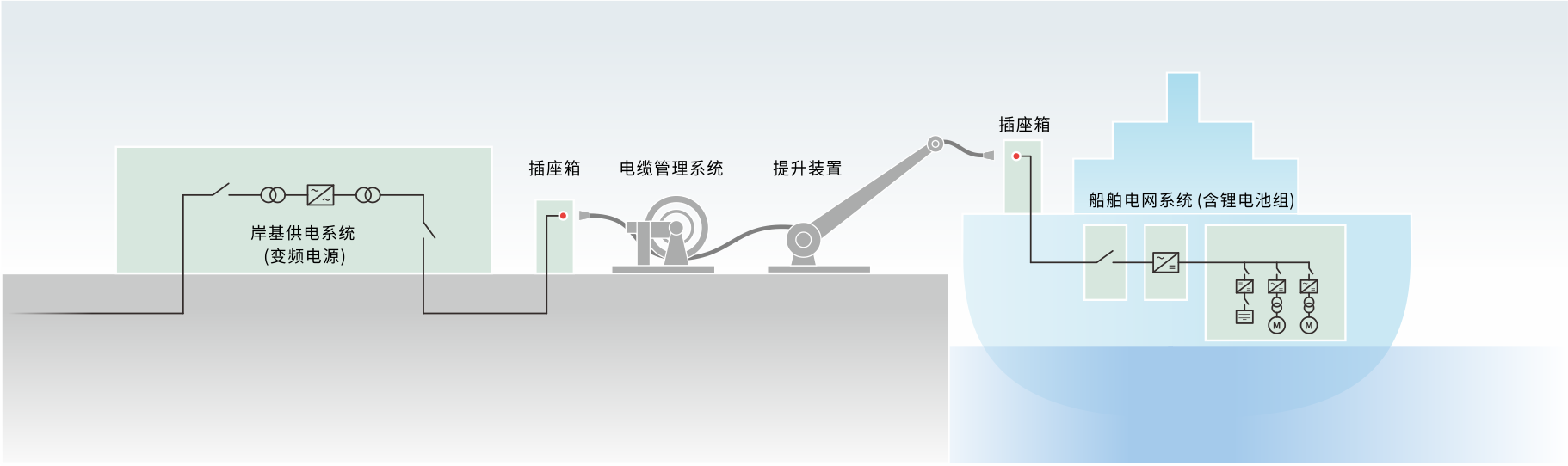
2. Low-Voltage AC Charging System Solution (Cable Reel on Shore Side)
For this solution, the shore side is configured with a variable-frequency power supply, socket box, cable management system, and cable lifting device. The shore-side cable management system and lifting device deliver the cable to connect with the vessel’s socket box, after which the AC/DC module on the ship’s switchboard charges the vessel’s battery pack. It applies to large hybrid-powered vessels.
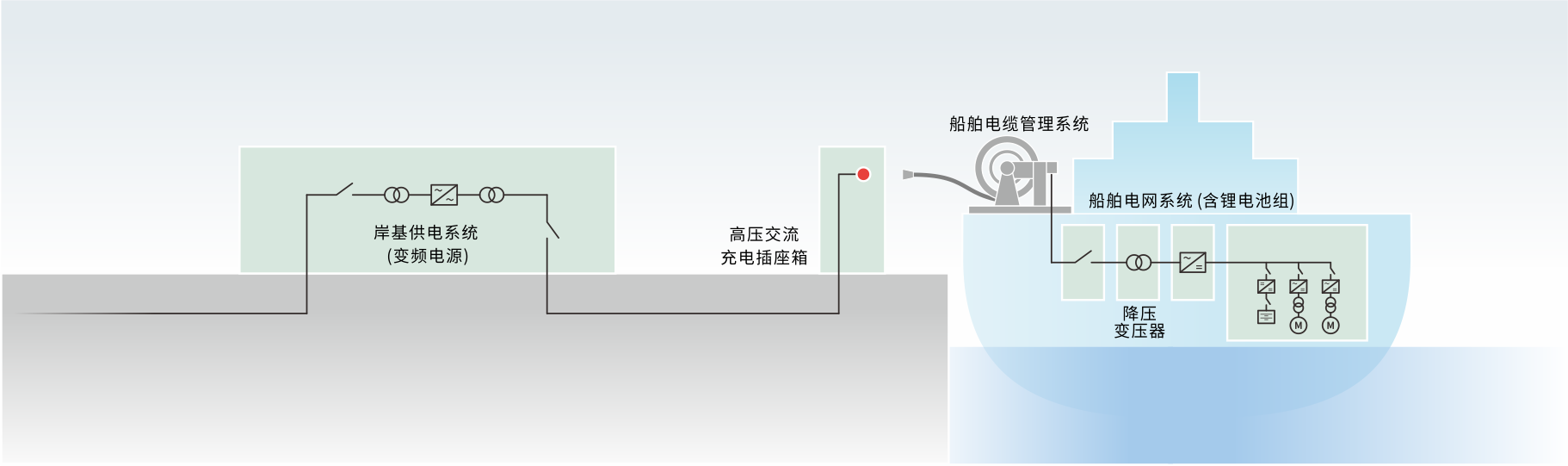
3. High-Voltage AC Charging System Solution
This solution installs a variable-frequency power supply and socket box on the shore side. The vessel-side cable management system sends the cable to connect with the shore-side socket box, and subsequently, the transformer and AC/DC module on the vessel charge the battery pack. It is designed for large hybrid-powered vessels.
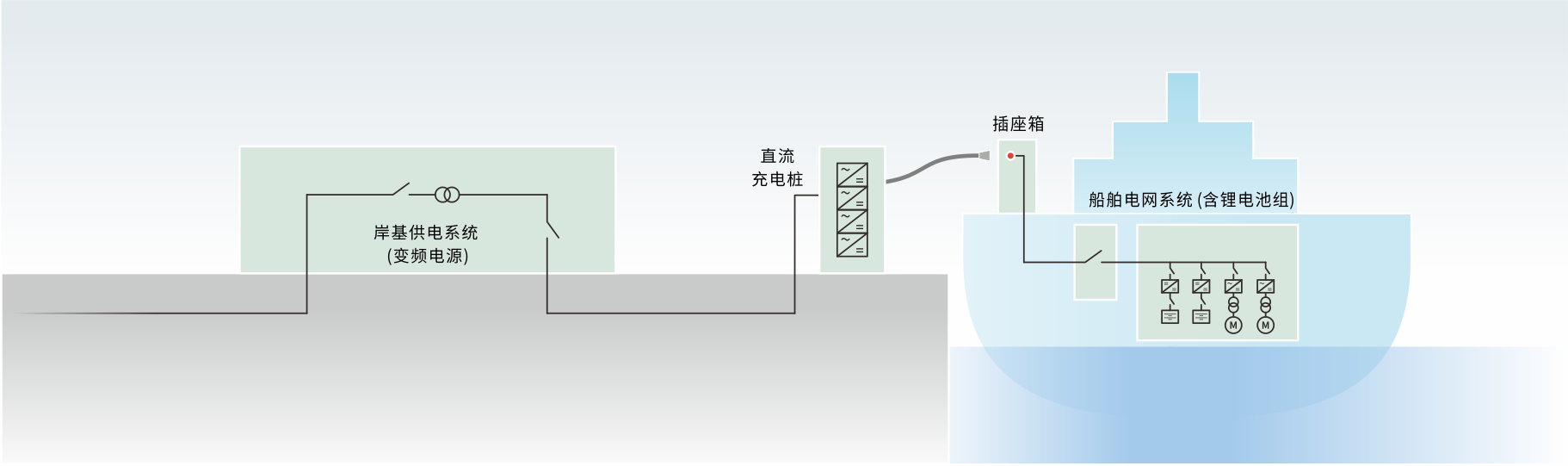
4. Slow DC Charging System Solution
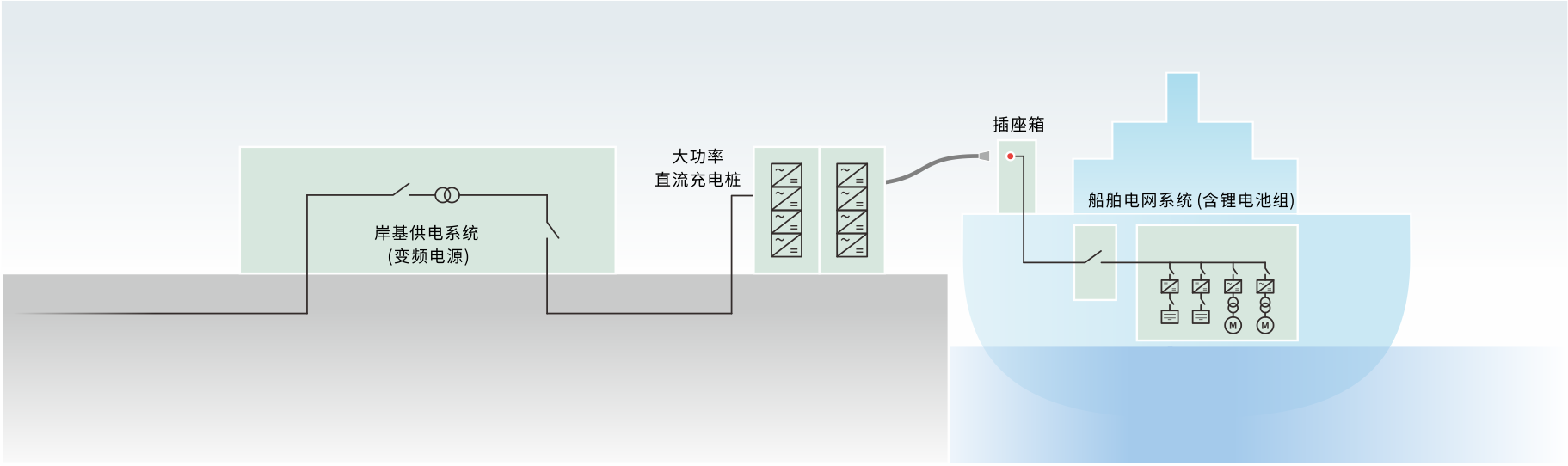
Composed of a shore-based power source and DC charging pile, this system charges the vessel’s battery pack by connecting the charging gun to the on-board charging socket box during operation. With a charging power ranging from 100kW to 500kW, it is suitable for small and medium-sized electric vessels operating along rivers and coasts.
5. Fast DC Charging System Solution
This solution consists of a shore-based power source and DC charging stack. When in use, the charging gun is connected to the on-board charging socket box to charge the battery pack, with a charging power exceeding 500kW. It can also serve as a shore power supply to ensure the electricity demand of vessels during berthing. It is applicable to large and medium-sized electric vessels along rivers and coasts, as well as large hybrid-powered vessels with DC networking.
Charging System Solutions for Inland River New Energy Vessels
1. AC/DC Charging System Solution for Inland Rivers with Large Water Level Drop (With Landing Stage)
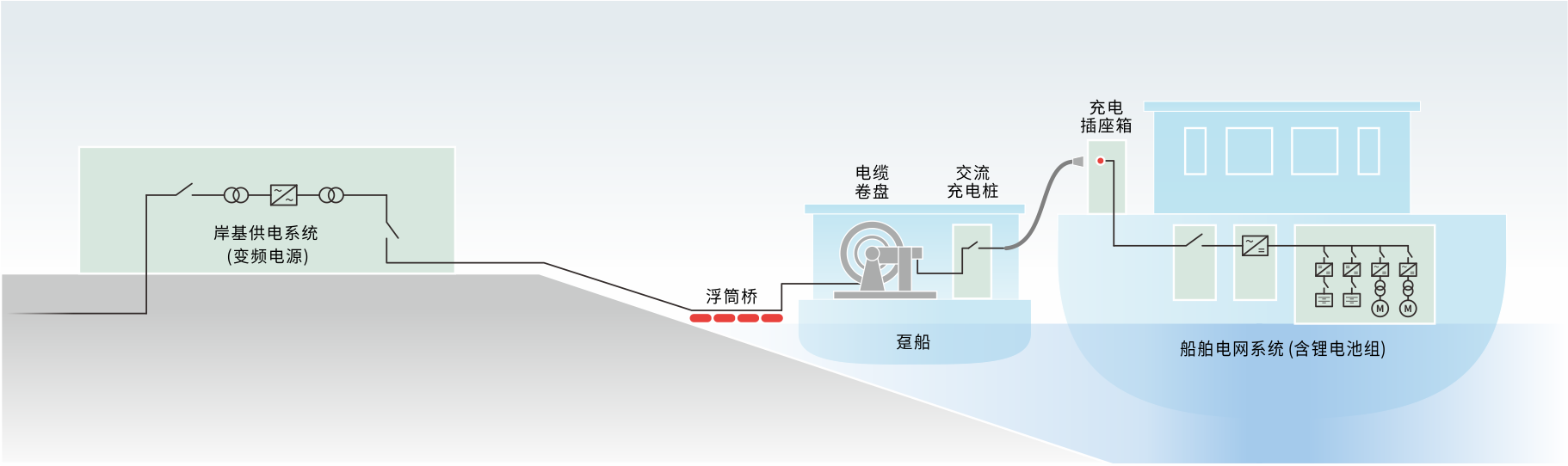
(1) Primarily for inland river scenarios, this AC charging system includes AC charging piles, landing stages, floating bridges, cable reels, and other equipment. It is ideal for areas with significant water level fluctuations and berthing points far from the shore, applicable to inland electric cargo ships and scenic spot cruise ships. The vessel must be equipped with AC/DC rectification equipment.
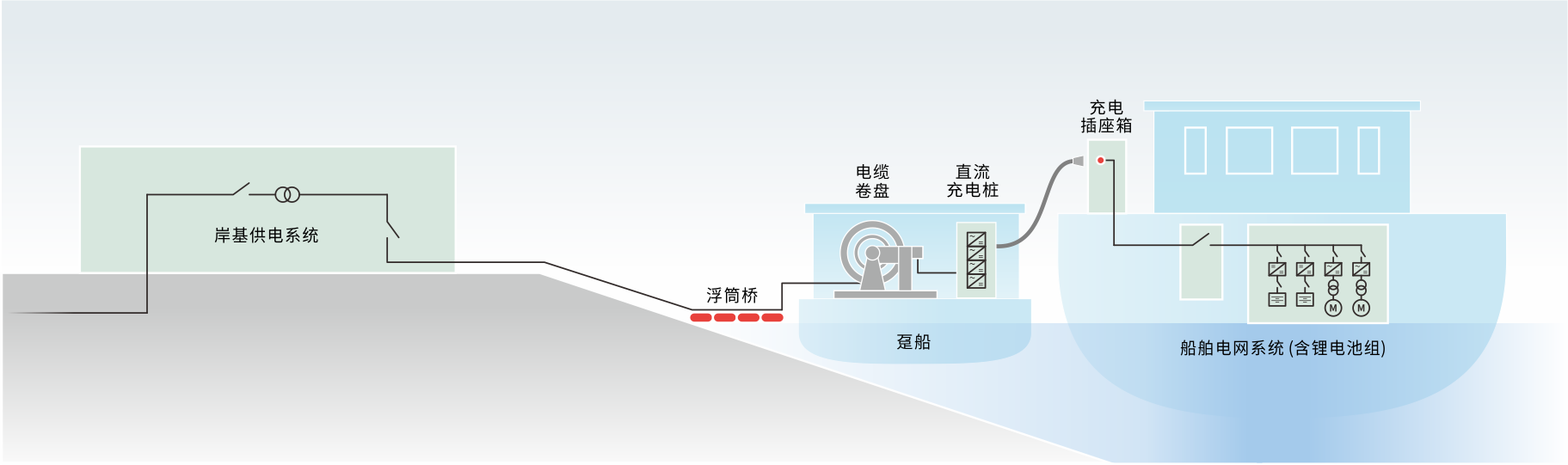
(2) Designed for inland river environments, this DC charging system comprises DC charging piles, landing stages, floating bridges, cable reels, and related devices. It suits locations with large water level drops and berthing points distant from the shore, and is applicable to inland electric cargo ships and scenic cruise vessels.
2. AC/DC Charging System Solution for Inland Rivers with Large Water Level Drop (Without Landing Stage)
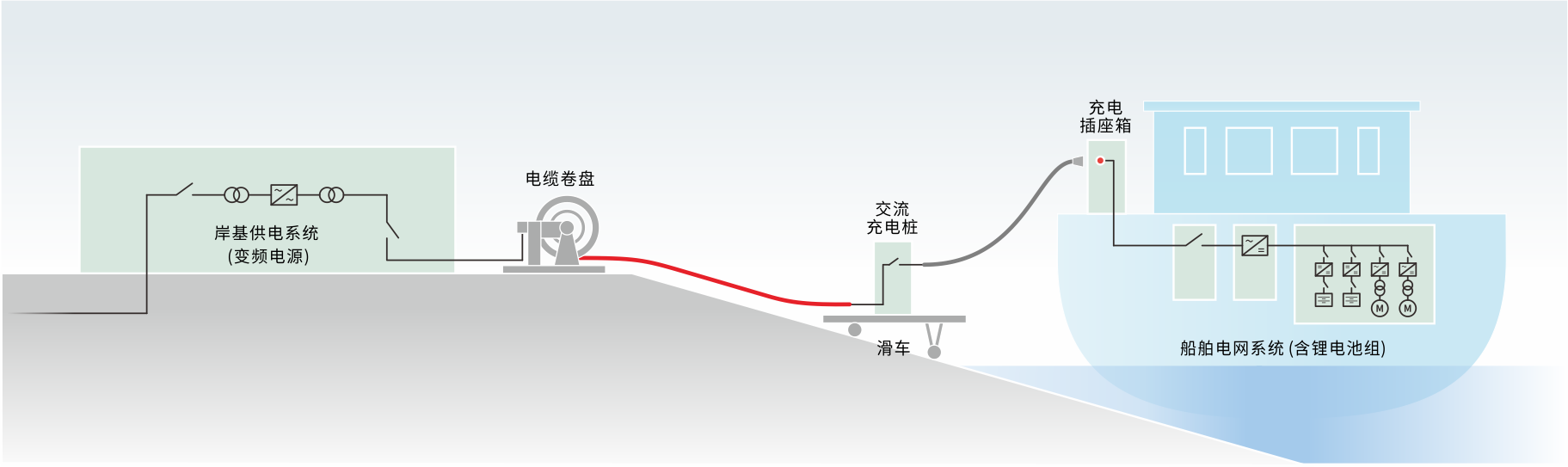
(1) This AC charging system for inland river use is equipped with AC charging piles, pulleys, cable reels, etc. It is suitable for areas with substantial water level variations, berthing points far from the shore, and flat embankments, and is applicable to inland electric cargo ships and scenic cruise ships. The vessel needs to be fitted with AC/DC equipment.
(2) For inland river applications, this DC charging system includes DC charging piles, pulleys, cable reels, and other components. It is intended for regions with large water level drops, berthing points far from the shore, and flat embankments, applicable to inland electric cargo ships and scenic spot cruise vessels.
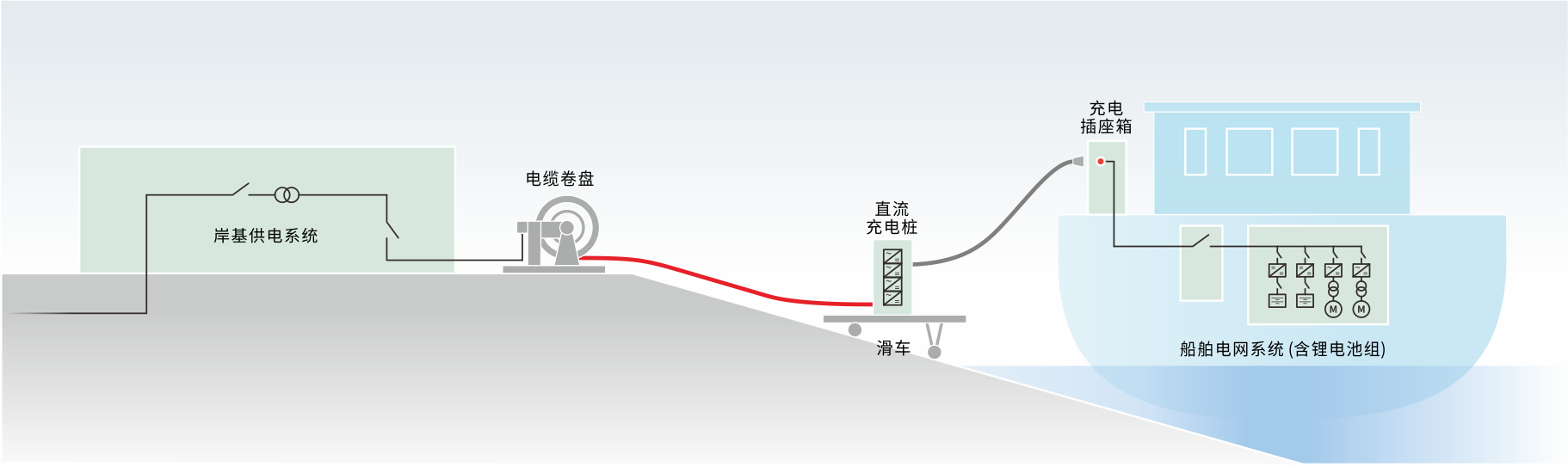
3. AC/DC Charging System Solution for Inland Rivers with Vertical Embankments and Large Water Level Drop
(1) This AC charging system for inland river scenarios is composed of charging socket boxes, cable reels, and other devices. It is suitable for areas with large water level fluctuations and vertical embankment berthing points (e.g., the Three Gorges Reservoir Area), and is applicable to inland electric cargo ships and scenic cruise ships. The vessel must be equipped with AC/DC equipment.
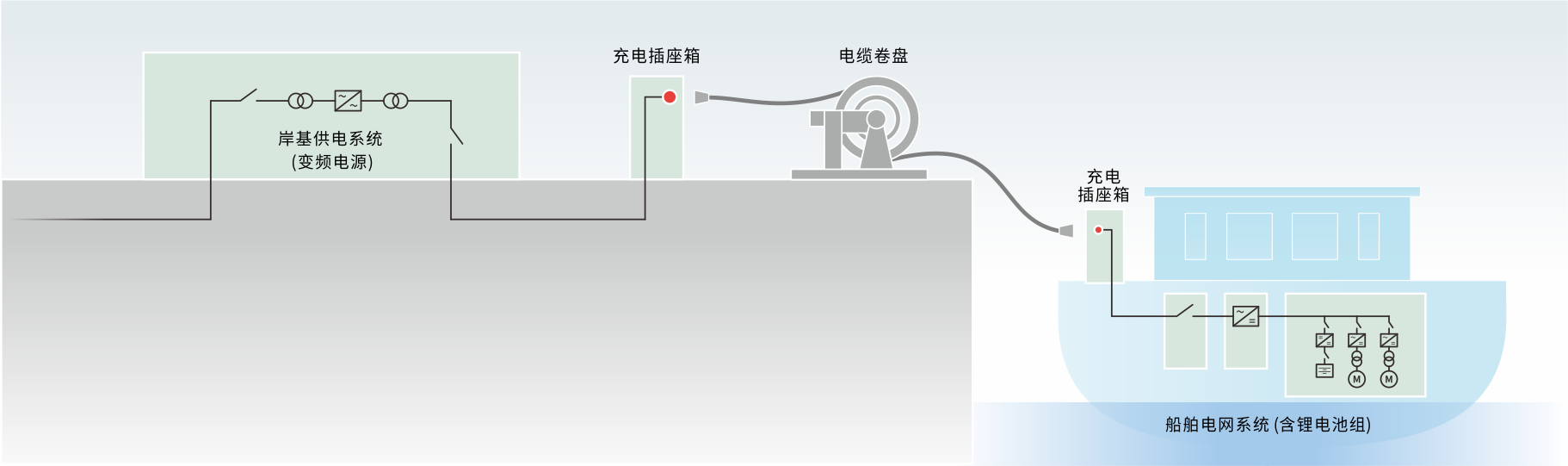
(2) Designed for inland river settings, this DC charging system includes DC charging piles, cable reels, and related gear. It is applicable to regions with large water level drops and vertical embankment berthing points (such as the Three Gorges Reservoir Area), suitable for inland electric cargo ships and scenic spot cruise vessels.