

POWER SOLUTION

Home » Power Solution » AC Charging

AC Charging

1. Low-Voltage AC Charging System Solution (Cable Reel on Vessel Side)

This solution equips the shore side with a variable-frequency power supply and socket box. The on-board cable management system delivers the cable to connect with the shore-side socket box, and then the AC/DC module on the ship’s switchboard charges the vessel’s battery pack. It is suitable for large hybrid-powered vessels.
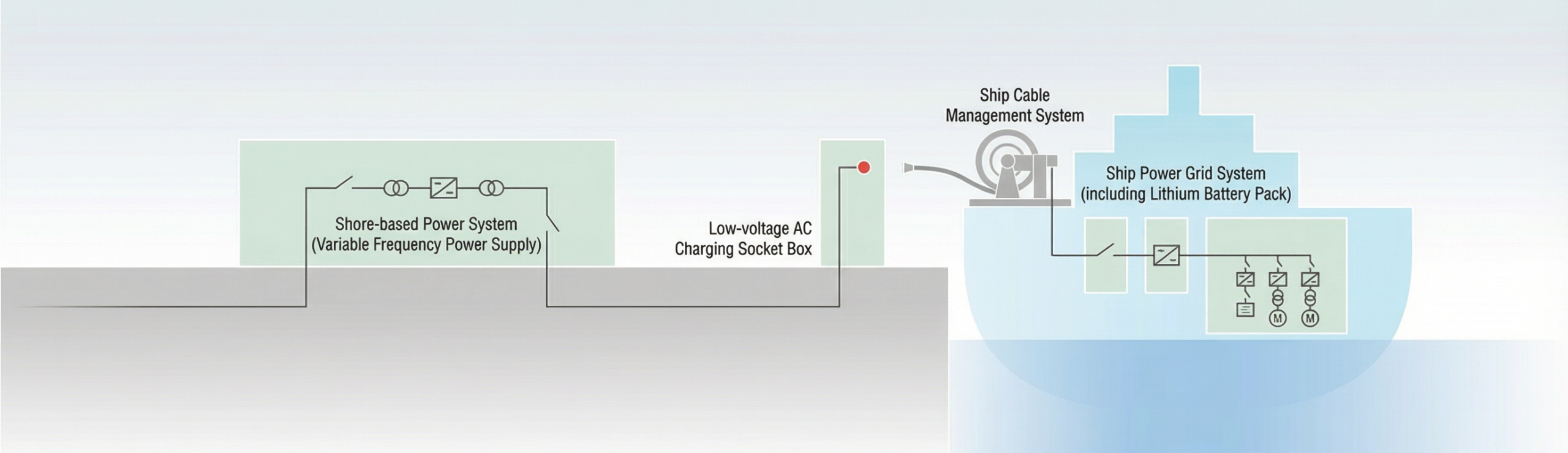
2. Low-Voltage AC Charging System Solution (Cable Reel on Shore Side)

For this solution, the shore side is configured with a variable-frequency power supply, socket box, cable management system, and cable lifting device. The shore-side cable management system and lifting device deliver the cable to connect with the vessel’s socket box, after which the AC/DC module on the ship’s switchboard charges the vessel’s battery pack. It applies to large hybrid-powered vessels.
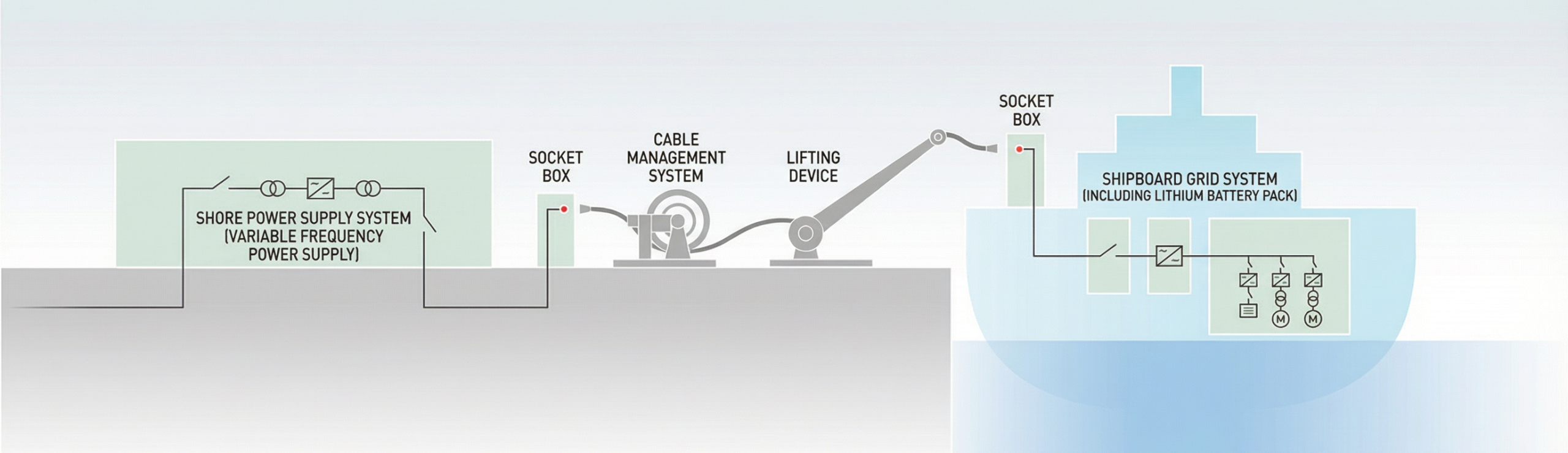
3. High-Voltage AC Charging System Solution

This solution installs a variable-frequency power supply and socket box on the shore side. The vessel-side cable management system sends the cable to connect with the shore-side socket box, and subsequently, the transformer and AC/DC module on the vessel charge the battery pack. It is designed for large hybrid-powered vessels.

4. Slow DC Charging System Solution

Composed of a shore-based power source and DC charging pile, this system charges the vessel’s battery pack by connecting the charging gun to the on-board charging socket box during operation. With a charging power ranging from 100kW to 500kW, it is suitable for small and medium-sized electric vessels operating along rivers and coasts.

5. Fast DC Charging System Solution

This solution consists of a shore-based power source and DC charging stack. When in use, the charging gun is connected to the on-board charging socket box to charge the battery pack, with a charging power exceeding 500kW. It can also serve as a shore power supply to ensure the electricity demand of vessels during berthing. It is applicable to large and medium-sized electric vessels along rivers and coasts, as well as large hybrid-powered vessels with DC networking.